The short answer
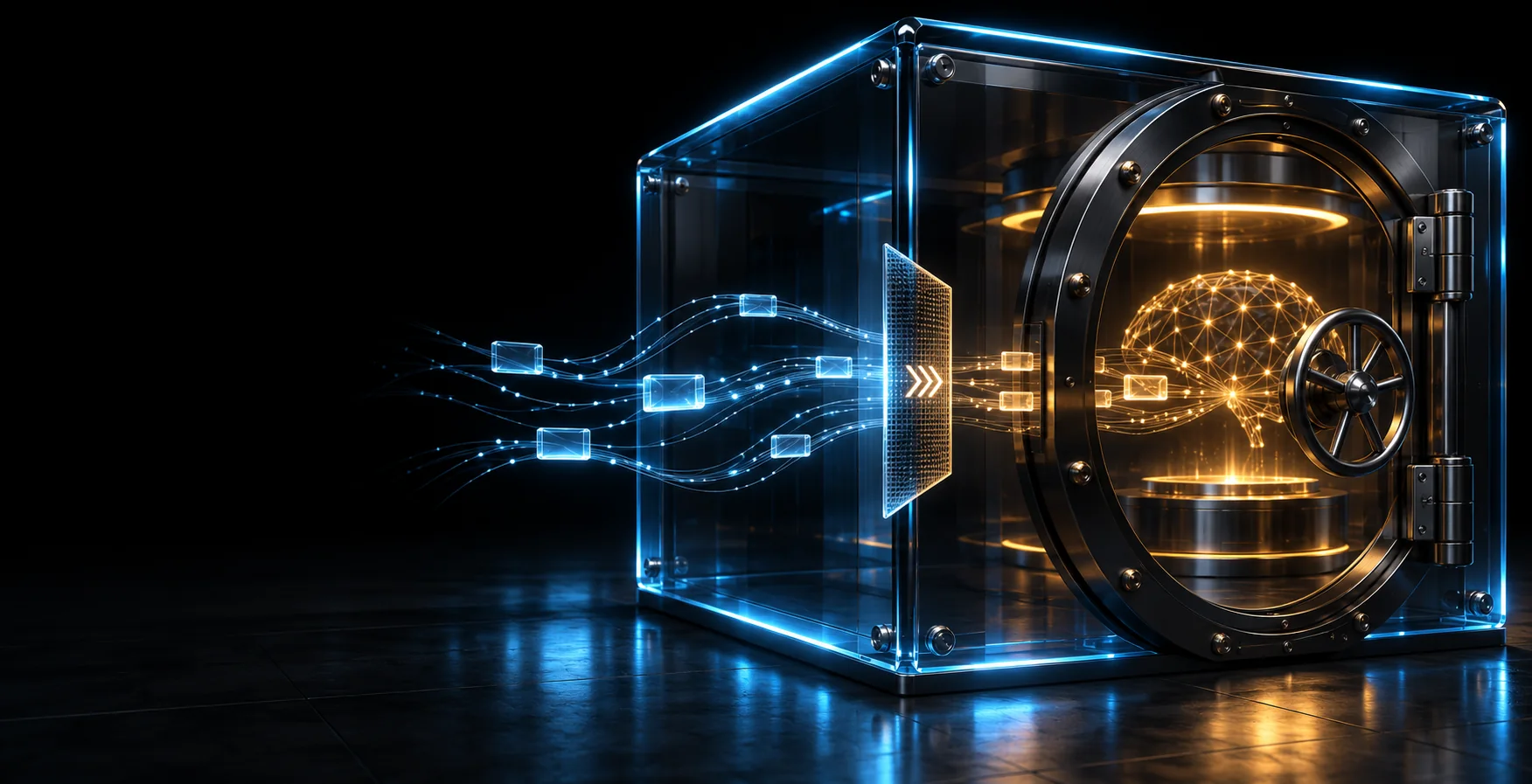
OpenCode Go privacy depends on the model you choose. Some endpoints are zero data retention, some retain abuse-monitoring data for 30 to 55 days, and contributor models may train on prompts only when a workspace explicitly enables that permission.
Does zero data retention mean the same thing as no training?
No. Zero data retention describes whether operational data is stored. Training permission describes whether prompts and completions can be used to improve a model.
A provider may keep short-lived abuse-monitoring logs while contractually prohibiting training. Another endpoint may promise no training but still retain data for security and debugging.
OpenCode Go exposes both fields in its public model metadata. Check zdr and training separately when the source code, customer data, or regulated information requires a specific policy.
Which data endpoints are blocked by default?
Workspace privacy settings block paid endpoints that train on request data by default. Workspaces without saved settings also restrict requests to Europe and the United States.
An owner or admin can change the policy in Settings › Privacy. Enabling a training endpoint or extending allowed regions is an explicit workspace decision, not an automatic side effect of selecting a contributor model.
The default policy matters for new workspaces. Review it before switching a codebase with confidential material between global and restricted-region models.
Which models have limited retention or no ZDR?
Retention varies. The current official documentation lists 30-day retention for some OpenAI, xAI, and Anthropic models, up to 55 days for Gemini 4 Argon, and zero-day retention for many open-weight models.
| Model | Published term |
|---|---|
| Grok 4.7 | 30 days |
| GPT-6 Luna | 30 days |
| Claude Haiku 5.5 | 30 days |
| Gemini 4 Argon | Up to 55 days |
| GLM-5.3 | 0 days |
| Kimi K3.1 Pro | 0 days |
| DeepSeek V4 Pro | 0 days under the current agreement |
| Hy4 | 0 days |
What are Contributor models?
Contributor models exchange heavily discounted usage for permission to use prompts and completions in model training. They should be treated differently from ordinary production models.
The current catalog marks Muse Spark Contributor models and Iceman Contributor Free with training enabled. Default workspace privacy settings block training endpoints unless an owner or admin explicitly changes the setting.
Do not enable a contributor endpoint for customer code, private credentials, incident data, or regulated information. If training is prohibited by policy or contract, exclude these models even when their price or task performance is attractive.
What regional restrictions apply?
Default regions are Europe and the United States. Some models require Global region access, and limited-region models may be unavailable in certain countries or regions.
- DeepSeek V4.1 Flash and V4 Pro require Global region access for supported use.
- LongCat-2.5 is hosted in China and requires Global region access.
- Muse Spark Contributor models have geographic restrictions based on the provider policy.
- Limited-time free models can have their own country and regional exclusions.
- Changing the workspace region policy can make additional endpoints available, but it also expands where requests may be processed.
What should you check before sending code?
Classify the data first, then verify the selected model’s training permission, retention term, hosting region, and workspace policy.
- 01
Identify whether the prompt contains credentials, personal data, customer records, or regulated source code.
- 02
Confirm the model is ZDR when storage is prohibited.
- 03
Confirm training is disabled when prompts cannot be reused.
- 04
Confirm the allowed region matches the workspace policy.
- 05
Remove secrets from repository context before invoking the agent.
- 06
Record the selected model and policy when an approval or audit trail is required.
How should a team monitor privacy drift?
Review model policy metadata on a schedule and treat provider changes, new contributor models, and region changes as events that require an approval check.
A static screenshot is not a privacy control. Model catalogs and provider terms can change, and a newly added model may have different retention or training behavior.
Use the public model metadata as an early warning, then confirm the legal term in the official documentation. Keep the final decision in workspace policy so individual harnesses do not silently opt into a weaker setting.
Primary sources
Verify the current details
Product availability, model limits, pricing, and data terms can change. These primary sources are the authority for the facts on this page.
Next step
Use a plan with clear model controls
Review the available Go plans, then choose a workspace policy that matches your source-code requirements.